Will the taxman take my shirt?
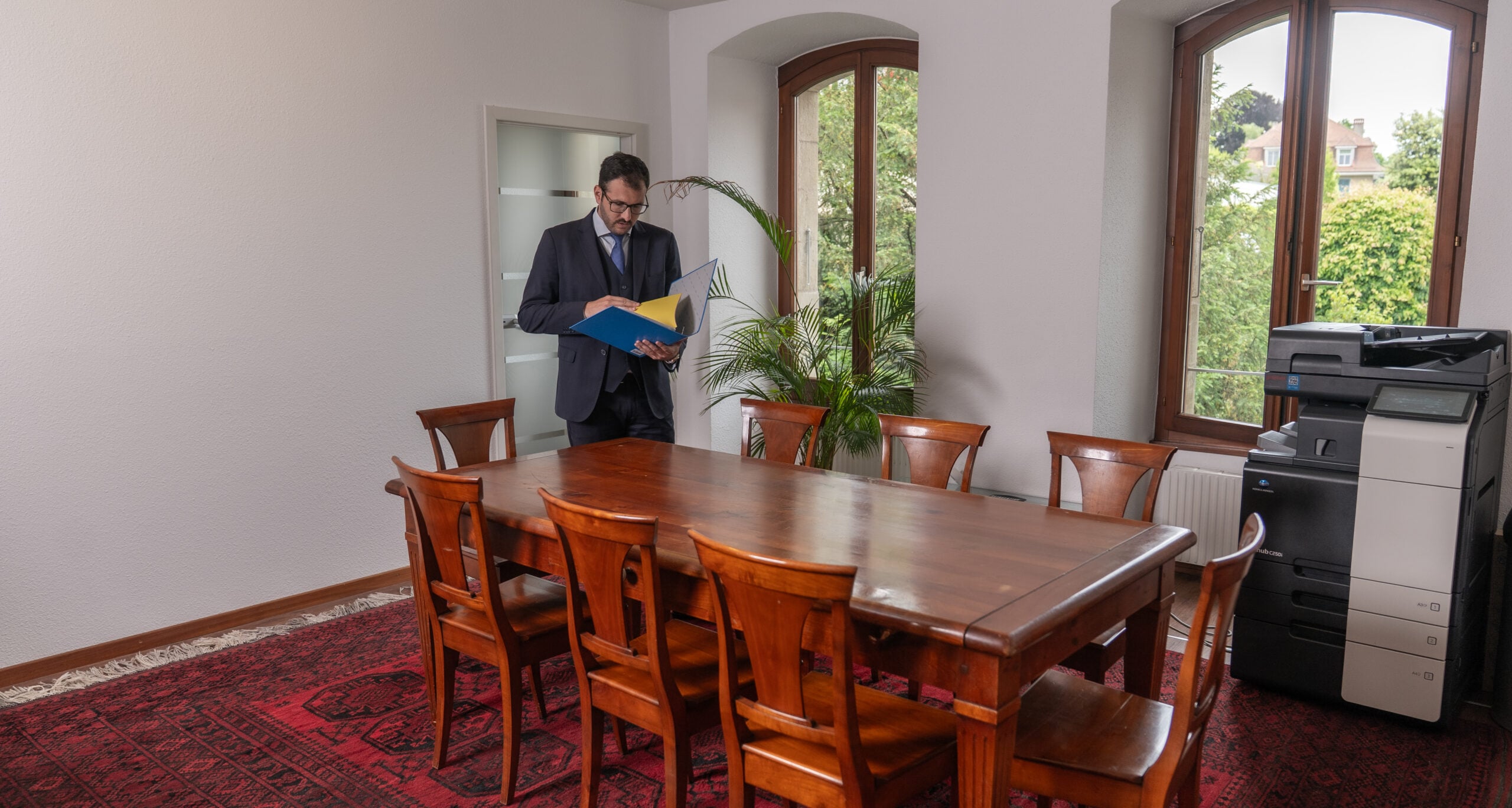
I’m an office worker and I only wear my suits to work.
Can I claim a tax deduction for their purchase and the dry-cleaning costs on my tax return?
E. Geneva
Unfortunately, no. Even if your suits are only ever worn to the office, the cost of buying and cleaning them is, in most cases, not tax-deductible. As far as the tax authorities are concerned, everyday clothing is still considered a private expense.
LIFD
Article 26 of the Federal Act on Direct Federal Tax (LIFD) allows employees to deduct only those expenses necessary for the performance of their work: travel between home and work, meals taken out, or certain expenses essential to the earning of their income.
The implementing regulation for this Act does indeed provide for the deduction of expenses relating to workwear and its exceptional wear and tear, but it all depends on what is meant by «workwear». According to the Federal Court, this refers to clothing used solely for work, such as overalls, lab coats, aprons, rubber boots and other protective clothing. Everything else is classified as personal clothing.
A teacher from Ticino who sought to claim a tax deduction for nine pairs of trousers – which he claimed had been purchased solely for the purpose of teaching – found this out the hard way. Our High Court rejected his claim, pointing out that everyday clothing constitutes a personal maintenance expense, even where a professional role requires a particularly smart, or even costly, appearance.
Managers were no more successful. A bank manager from Vaud was also refused a tax deduction for his suits, shirts, ties and shoes. According to the judges, what matters is not how you actually use your jacket, but how you could use it.
As for dry-cleaning costs, the same principle applies. In particular, the courts have held that expenses relating to the maintenance and cleaning of the smart clothing worn by lawyers do not, either, constitute deductible business expenses.
All is not lost. For direct federal tax, a flat-rate deduction is granted without the need for supporting documents for other work-related expenses; this amounts to 3% of net salary, with a minimum of 2,000 francs and a maximum of 4,000 francs in 2026. In Geneva, the cantonal flat-rate allowance is 3%, ranging from 600 to 1,700 francs. You may claim higher actual expenses, provided you can substantiate them, but your wardrobe will not be included.
At the end of the day, you can’t judge a book by its cover in the eyes of the taxman, even though a cassock should, in theory, be tax-deductible!
Read Pascal Rytz's columns on Tribune de Genève