Should you confess your feelings to HR?
I’ve been in a relationship with my team leader for nearly two years now. Nobody at the office knows about it. We arrive at different times and we never have lunch together in the canteen.
Following a number of high-profile cases involving such relationships – including the one involving Nvidia’s board of directors, which is considering the future of its chief executive – our management has looked into the matter and announced a new code of ethics.
Should we risk losing our jobs? Should we confess everything straight away?
C, Lancy
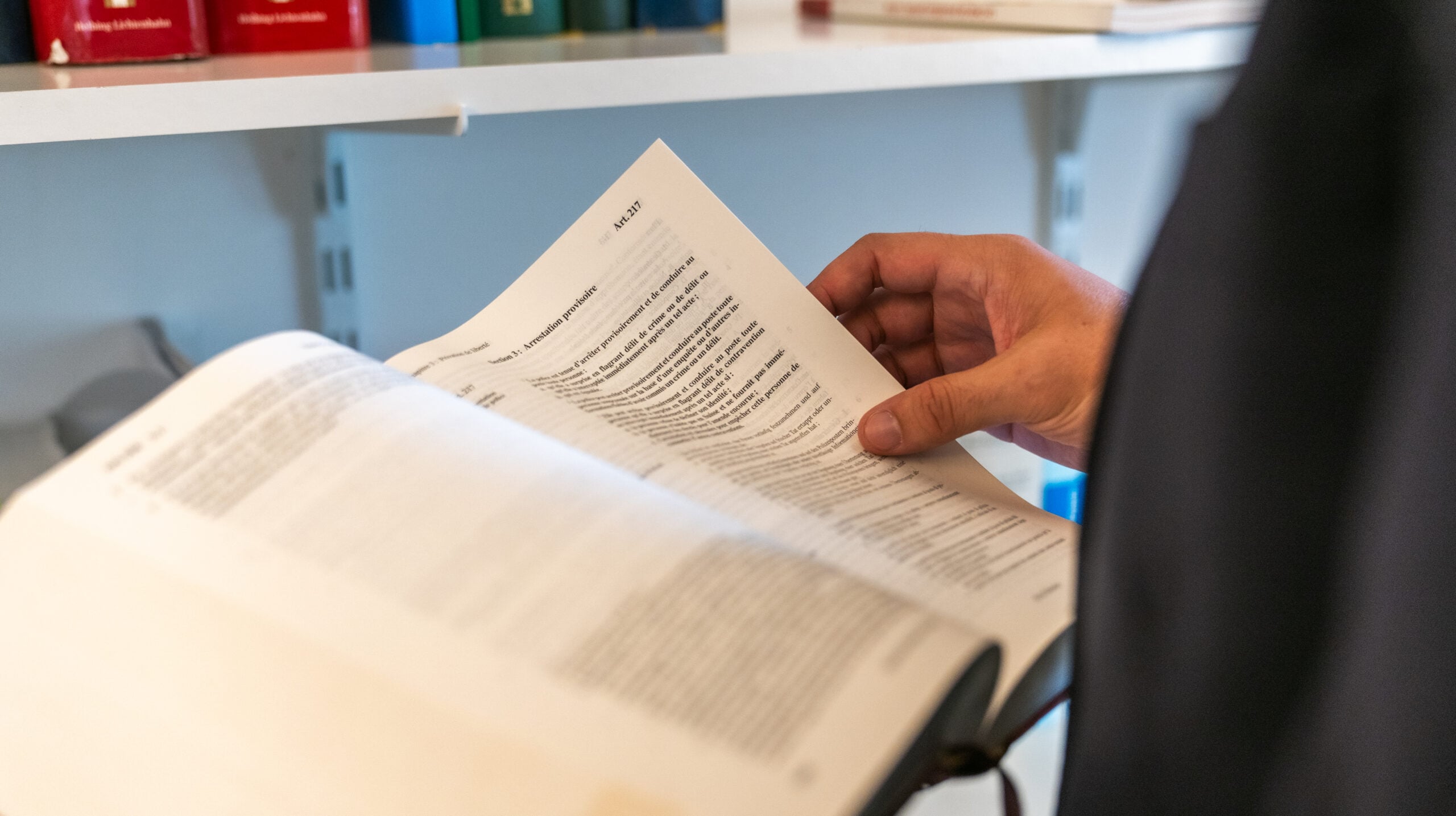
No, love is not professional misconduct, and Geneva is not Silicon Valley. No Swiss law prohibits two colleagues from being in a relationship, even when one is the other’s manager. Moreover, Article 328 of the Swiss Code of Obligations (CO) requires employers to protect and respect their employees’ personal rights, including their right to privacy.
However, the employment contract is not oblivious to personal feelings. Section 321a of the Swiss Code of Obligations (CO) requires every employee to faithfully safeguard their employer’s legitimate interests. Yet a manager who assesses, gives a pay rise to or promotes their own partner finds themselves in a clear conflict of interest. The employer may therefore, pursuant to Article 321d of the Swiss Code of Obligations (CO), issue guidelines on staff conduct, such as a requirement to disclose a relationship with a subordinate. A policy that outright prohibits any romantic relationship, on the other hand, would go beyond what is required for the smooth running of the business.
Is your job at risk? Under Swiss law, each party is, in principle, free to terminate the contract. The Federal Supreme Court regularly reiterates this, whilst making it clear that this freedom ends where unfair dismissal begins. According to Article 336 of the Swiss Code of Obligations (CO), dismissal on grounds relating to a person’s character is unfair, unless such grounds are linked to the employment relationship or seriously prejudice the company’s operations. Dismissal based solely on your relationship would therefore be open to challenge; dismissal based on proven favouritism, far less so. It should be noted that – even if unfair – the dismissal remains valid, but entitles the employee to compensation set by the court, capped at six months’ salary (Article 336a of the Swiss Code of Obligations).
So lay your cards on the table if the new policy requires it, and suggest, for example, that your partner should no longer be the sole decision-maker regarding your targets, your salary or your promotions. An open and formalised relationship will protect you far better than a secret kept behind closed doors, because whilst the heart has its reasons which reason cannot fathom, HR often ends up finding out anyway…
Read Pascal Rytz's columns on Tribune de Genève