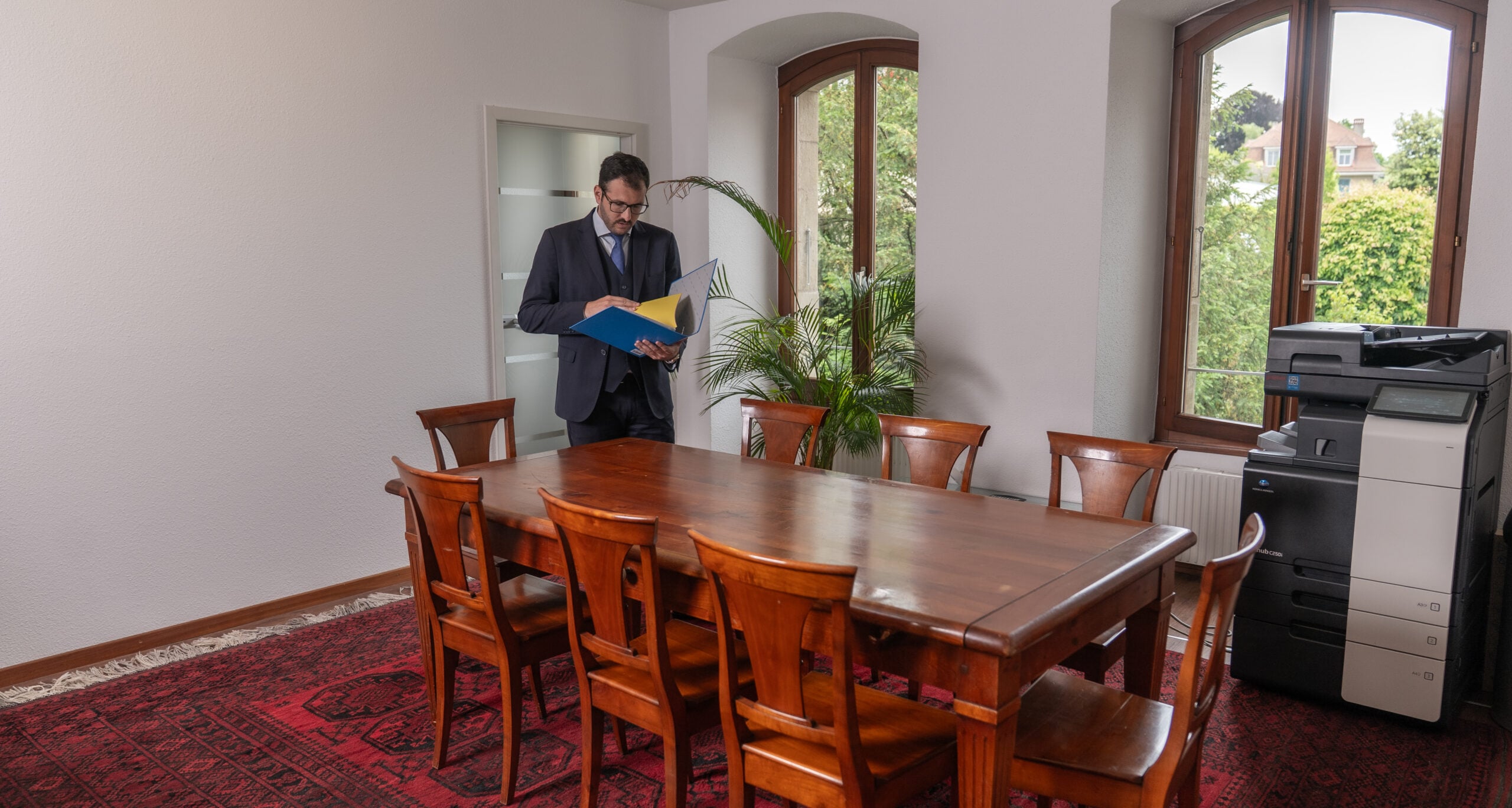
Just a minute, I want to keep this faulty item!
I bought a table whose design I really like, but unfortunately it was damaged when it was delivered to my home. After too many discussions, the seller is unable to repair or exchange it and is only offering me a full refund and the return of the goods. I want to keep the furniture, but obviously I feel I should be entitled to a substantial discount, which the seller is refusing to give me! Is this justifiable?
A, Nyon
You have every right to want to keep your table and demand a price reduction: Swiss law expressly allows you to do so!
In a contract of sale, the seller is obliged to deliver the agreed item free of defects. If this is not the case, as in this case, the buyer has a number of options available to him under Articles 205 et seq. of the Swiss Code of Obligations (CO). In application of the warranty action provided for by law, and unless the general terms and conditions of the contract provide otherwise, where the item delivered has a defect, the buyer may demand either repair, an exchange or a reduction in price, or even cancellation of the contract if the defect is significant.
The case law and legal doctrine state that these rights are equivalent, so it is not up to the seller alone to decide what solution to impose on the buyer. If you wish to keep the item of furniture despite the defect and are prepared to forego exchange or rescission, you may legitimately demand a reduction in the price, known as an «action minutoire». The seller cannot force you to return the item for a full refund if you do not wish to do so, even if the seller is unable to exchange or repair the item. That said, if the loss of value claimed is equal to the sale price, you can only ask for the contract to be rescinded. The seller cannot simply refuse your request for a discount.
In practice, the amount of the price reduction is calculated using the relative method. This involves determining the objective loss in value of the item of furniture, which corresponds to the difference between the value it would have had if it had been delivered in perfect condition (value without defects) and the value it has in its defective condition (value with defects). To facilitate this calculation, case law presumes that the value without defect is equal to the agreed price and that the loss in value corresponds to the cost of repair. It would therefore be useful to obtain an estimate or appraisal of the cost to justify your position. If it is difficult to establish a precise amount, it is the judge who will set the reduction fairly, provided that he does not manage to get the protagonists to agree after one or more rounds... of the table.